Longevity programme · neurocentre
More years at full capacity,
not just more years.
Medicine has added decades to life without adding as many years of independence. The neurocentre Longevity programme measures what determines your ability to walk, carry, climb and get up — and helps you preserve it.
Launching early 2027
The facts
People live long in Switzerland. Not always at full capacity.
At 65, a woman can expect to live another 22 years, a man nearly 20. Yet part of those years is lived with limitations in daily life.
Women
6.1years
lived on average with limitations, from age 65
Men
3.5years
lived on average with limitations, from age 65
Women live 2.4 years longer than men, but those extra years are almost entirely years with disability: their independent lifespan is the same.
This is not inevitable. In Switzerland, between 2007 and 2017, disability-free years grew faster than life expectancy. The trajectory can change — and it partly depends on factors that can be measured and modified.
Source: Seematter-Bagnoud L. et al., Swiss Medical Weekly, 2023 — disability-free life expectancy at 65, Swiss data for 2017.
What really matters
What you can do says more than what your blood contains.
Many longevity offers rely on blood panels and a “biological age”. The measures that best inform future independence are simpler: they measure what your body can do.
 01
01Cardiorespiratory fitness
VO₂max · walking test
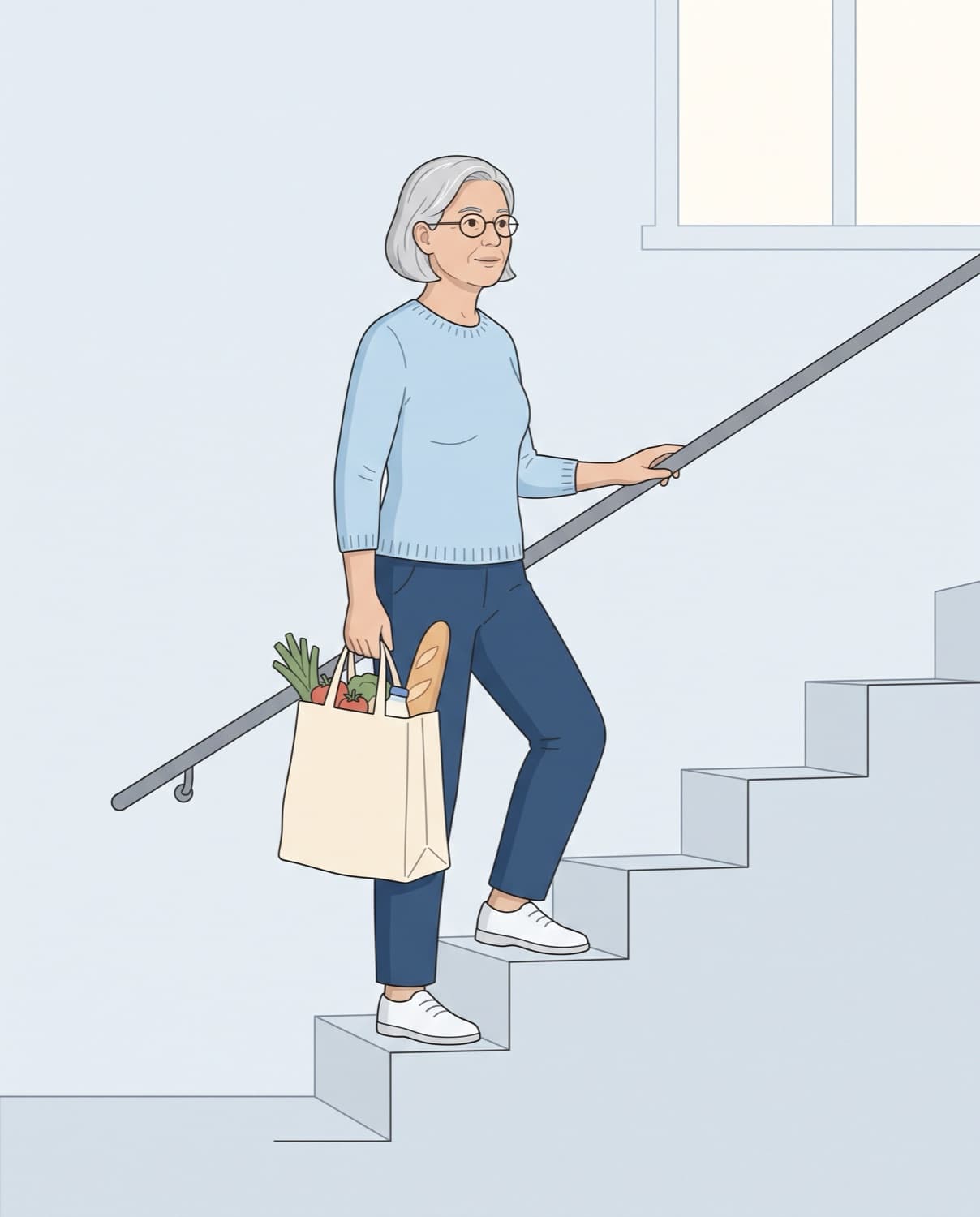
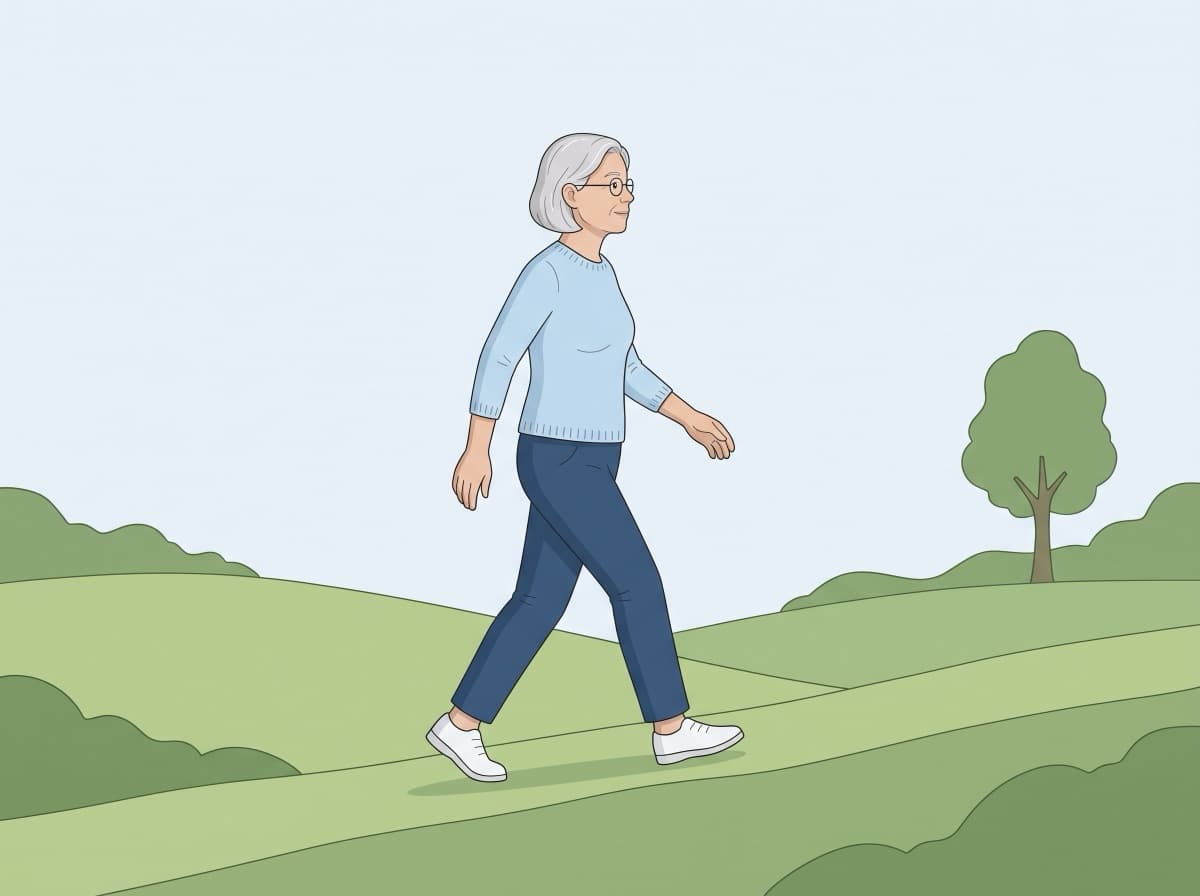
Your breath during exertion. Low fitness is associated with a mortality risk of the same order as smoking or diabetes. Below a certain level, climbing a flight of stairs or walking uphill becomes exhausting.
 02
02Grip strength
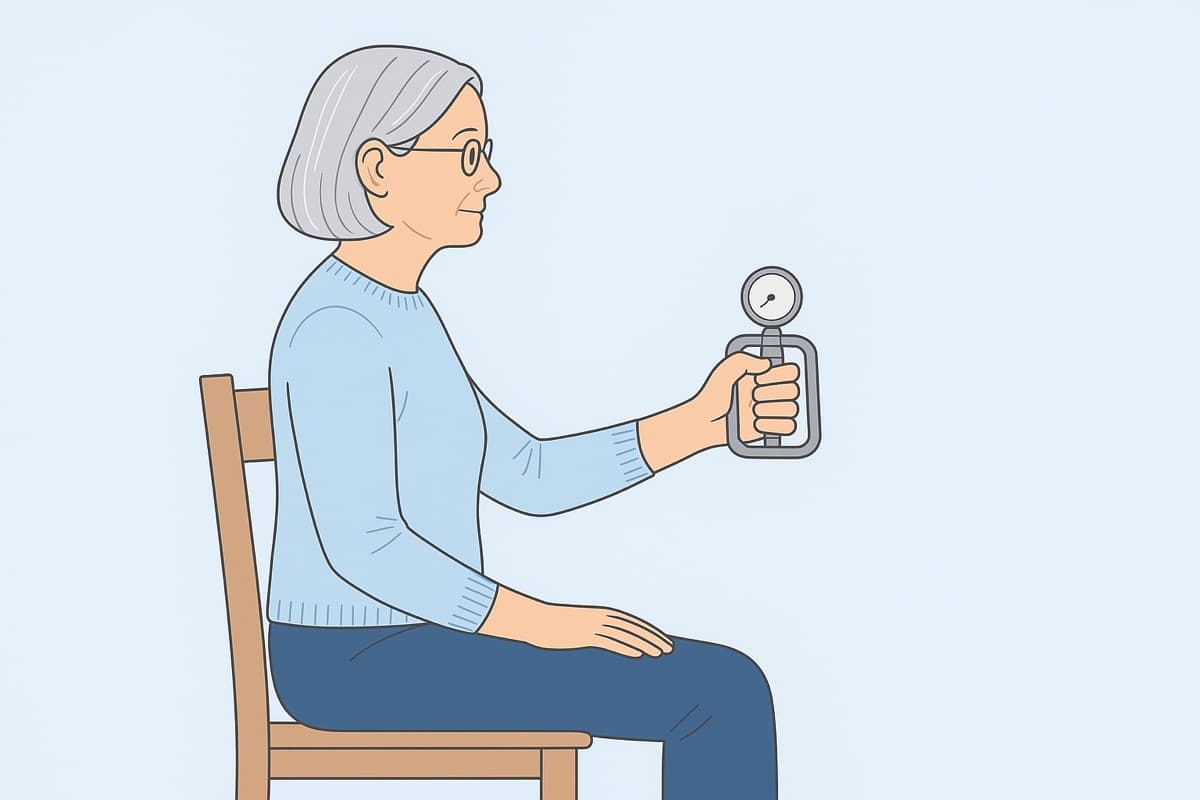
Dynamometer · one minute
How hard you can grip reflects the strength of the whole body. Each 5 kg drop is associated with a mortality risk about 16% higher.
 03
03Muscle mass
Body composition and strength
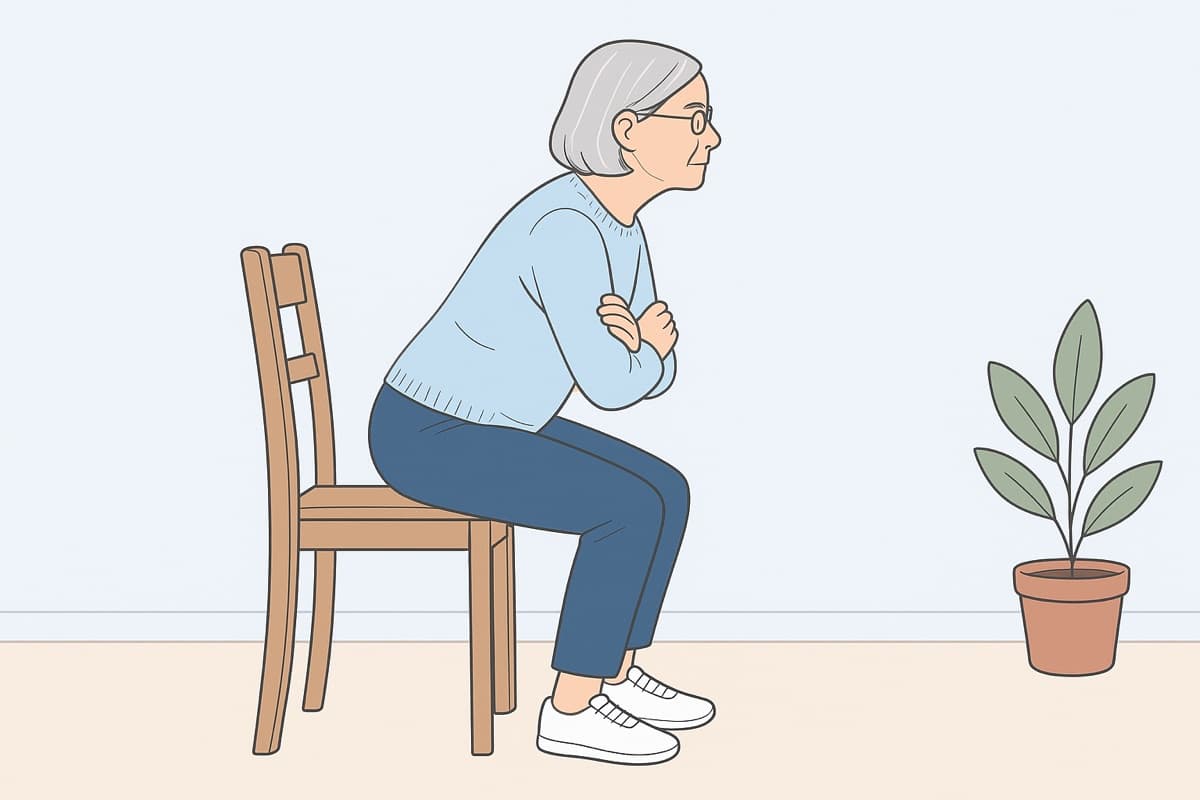
Your muscle is your reserve for carrying, climbing and getting up. After 50, it declines by about 1 to 2% a year, and its strength even faster. Preserving it means keeping the ability to rise from a chair or catch yourself after a stumble.
These measures are associated with future independence: improving them is the goal of the programme, not a promise. The good news is that strength responds to training at any age, within weeks.
The programme
Measure, target, support — over twelve months.
The programme is aimed primarily at people over 50, and at those recovering from an episode of back pain or preparing for surgery. It replaces neither treatment nor surgery: it preserves everything around them.
- 1
The assessment
45 minutes
Several aspects of your physical condition are measured with simple, validated tests. Together, they guide the choice of the programme that suits you.
- 2
Your reserve profile
Medical consultation
The doctor goes through your results with you and identifies what to work on first — often not what you expected.
- 3
Supervised sessions
With a physiotherapist
You learn the exercises with a physiotherapist, then continue with a personal programme, adjusted every week.
- 4
Follow-up
At 3, 6 and 12 months
Check-ups timed to when the body has had time to respond: progress is measured and the target adjusted.
At home or at the gym: your choice
Every programme comes in two versions, built on the same progression logic and followed by the same team.
At home
The neurocentre provides the equipment you need. You train at home, whenever it suits you, with no commute and no membership.
At a fitness gym
You train at a fitness gym, with a programme adapted to the machines and equipment you find there.
Why this choice?
Because the best programme is the one you actually follow. A workout that is ideal on paper but has no place in your life stops after a few weeks. A well-built programme, followed for years, really changes your trajectory. So we adapt the programme to your daily life — not the other way round.
An app that links your appointments
Your session of the day, your progress, and a team following your journey week by week. The app does not replace guidance: it extends it between sessions.
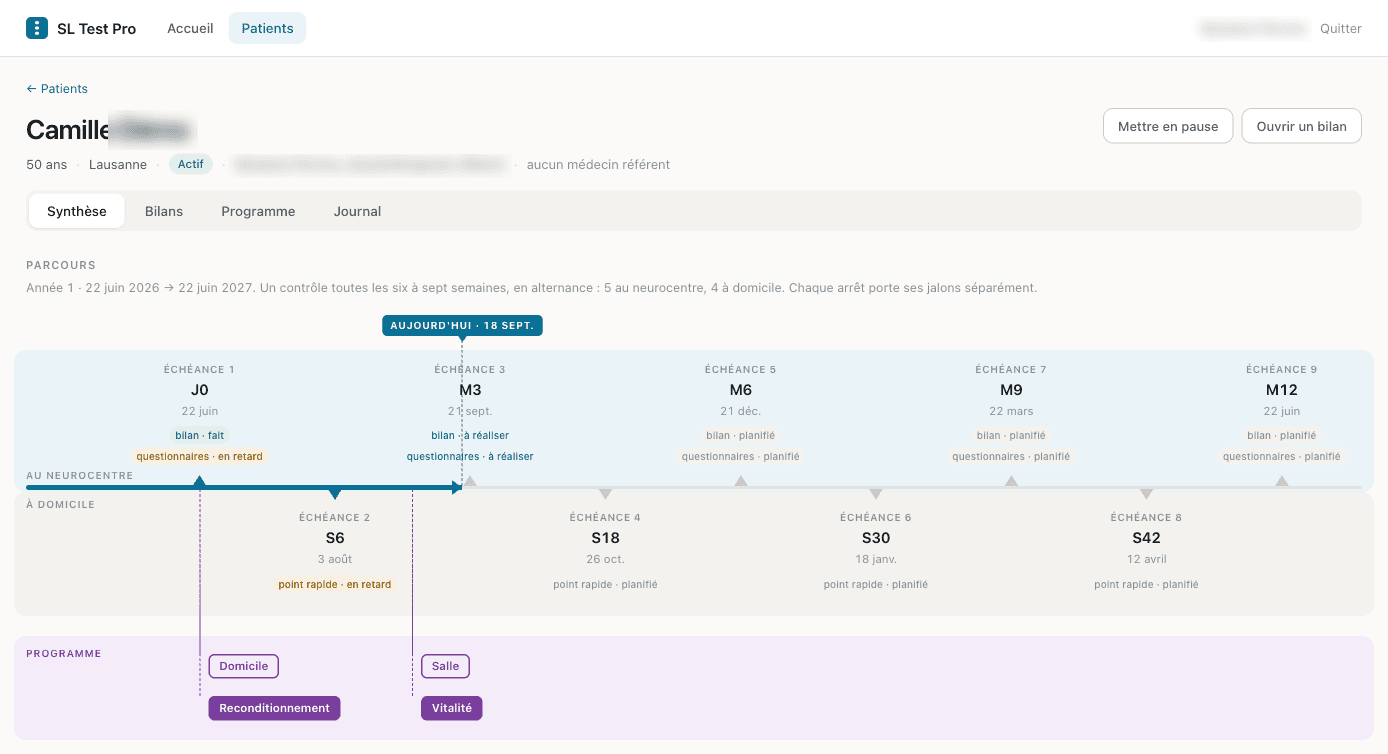
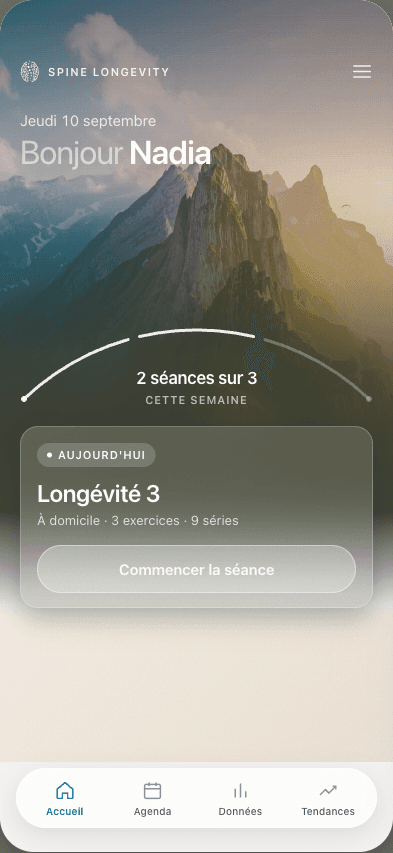
Preview of the app, with fictitious data.
The scientific basis
A programme built on a reference work
Written for doctors and therapists, this handbook gathers the scientific evidence on which the programme rests. It explicitly separates what is established, what is proposed and what remains to be shown — a rare standard in the field of longevity.
Forthcoming

Spine
Longevity
Préserver le rachis, la mobilité et l'autonomie tout au long de la vie
Dr Jimmy Villard
Neurochirurgien FMH · neurocentre — centre du dos, Lausanne
Sign up
Be the first to know
Leave us your details: we will write to you as soon as the first places open, in early 2027. No commitment.