Electromyography (EMG) is an examination that evaluates the functioning of nerves and muscles. It detects nerve damage, locates its cause and measures its severity. Performed in consultation, it involves electrically stimulating the nerves and recording the muscle response, in a rapid, targeted and minimally uncomfortable way.
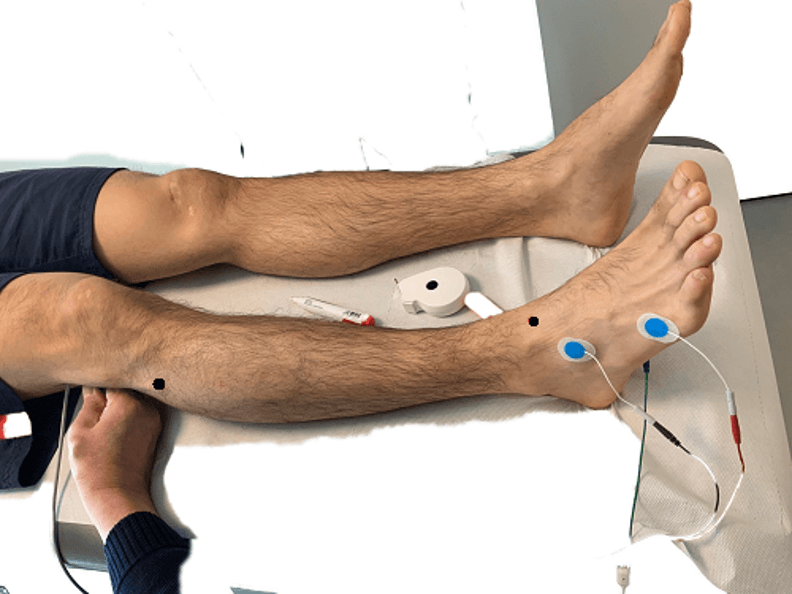
How the examination works
EMG consists of two parts. The first measures nerve conduction velocities by painless surface electrical stimulation. The second is a needle electromyographic examination that records the electrical activity of muscles at rest and during voluntary contractions. The examination generally lasts between 30 and 60 minutes.
Specialised interpretation
Results are interpreted by our FMH neurologist, who has specific expertise in electrophysiology. Each examination gives rise to a detailed report transmitted to the requesting physician, with management recommendations.
Practical advice before the examination
To ensure the smooth running of your examination, please note the following:
- 1
If you are taking blood thinners (anticoagulants such as Sintrom®, Eliquis®, Xarelto® or others), please inform the Neurocentre, as the needle examination of the muscle is reserved for cases of major diagnostic necessity (risk of muscular haematoma).
- 2
Electrical stimulations cause small shocks that are generally very well tolerated, but may be considered uncomfortable by some patients. Optimal electrode positioning minimises the discomfort associated with the examination. We do not perform EMG examinations in children.
- 3
To optimise contact between the skin and the electrodes, please avoid applying creams or ointments to the skin of your arms and legs.
Conditions treated
- Suspected disc herniation with radiculopathy
- Carpal tunnel syndrome
- Polyneuropathy
- Myopathy
- Amyotrophic lateral sclerosis (ALS)
- Thoracic outlet syndrome
- Ulnar nerve compression at the elbow
- Traumatic mononeuropathies
Acts and procedures
- Motor nerve conduction measurement
- Sensory nerve conduction measurement
- Needle electromyography
- Somatosensory evoked potentials (SSEP)
- H-reflex and F-wave studies
Book an appointment
Our secretaries will direct you to the right specialist for your situation.
+41 21 312 49 59Our other specialties